
Custom Post Format

Giorgio Häfner - Luigi dei Sacri Cuori

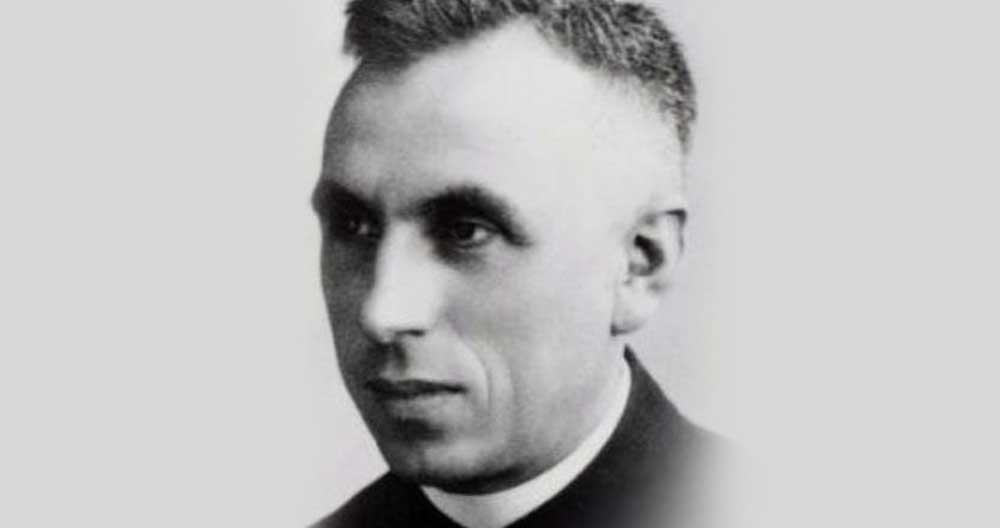
BLESSED GEORG HAFNER

George Hafner was born on 19 October 1900 in Wurzburg, Bavaria.  His parents, Valentin and Barbara Hewig Ulsamer, were simple, humble and believing Christians who brought up George with a good education and a deep faith.  He was baptized on 28 October 1900 and given the names Joseph George Simon.

From early childhood, George manifested a strong inclination towards the priesthood. He excelled as an altar boy at serving Mass and often entertained his companions by playing at imitating a priest celebrating Mass.  His parents made many sacrifices so that George could complete his early studies. In 1918 he completed his secondary studies and, due to the First World War, was called up for army service. He never had to engage in any military activity. With a view to preparation for the priesthood, he began Philosophy and Theology in Wurzburg University and on 11 January 1920 he also joined the Carmelite Secular Order, taking the name Brother Aloysius of the Most Blessed Sacrament.

Having obtained a doctorate in Theology, George was ordained a priest in the Seminary chapel of St. Michael, Wurzburg, by the Archbishop of Bamberga, Mons. Jacob von Hauck, on 13 April 1924.  He was engaged in Pastoral ministry in different parishes until 12 November 1934, when he was nominated as Parish Priest of Oberschwarzach.  Here he distinguished himself for his firm faith, extraordinary zeal and outstanding charity.

The Venerable Servant of God fulfilled all his priestly duties with great humility, in constant silence and prayer.  His only desire was to encourage his faithful to be aware of their duties and to observe  their religious practices.

Due to his fruitful pastoral activity, including religious education in the state schools, the Parish Priest of Oberschwarzach came to be seen as an enemy of the Nationalist-Socialist regime, due to his propagating 0f Christian principles which were considered as being opposed to the State.  As his enemies could not find any valid accusation against him they resorted to a treacherous plot.  During the funeral of a forest guard, they took the opportunity of denouncing him to the Gestapo.  At that funeral service, Don Georg revealed that the deceased had been reconciled to the Catholic Church before his death.  As a result, a second marriage of his, contracted in a civil rite, was invalid. 

On 31 October 1941, the Servant of God was unjustly arrested, interrogated and incarcerated in Wurzburg prison with an accusation of “hostile behaviour towards the State”. Being condemned as a political prisoner, Don Georg was deported by the Nazi authorities to the concentration camp of Dachau, on December 1941.  During his imprisonment, he never ceased to preach the truthful tenets of the Christian faith, while staunchly enduring all his physical and moral sufferings.  He carried the cross, accepting the will of God in every situation.  He died of neglect the 20 August 1942.

His Beatification ceremony took place in Wurzburg on 15 May 2011.
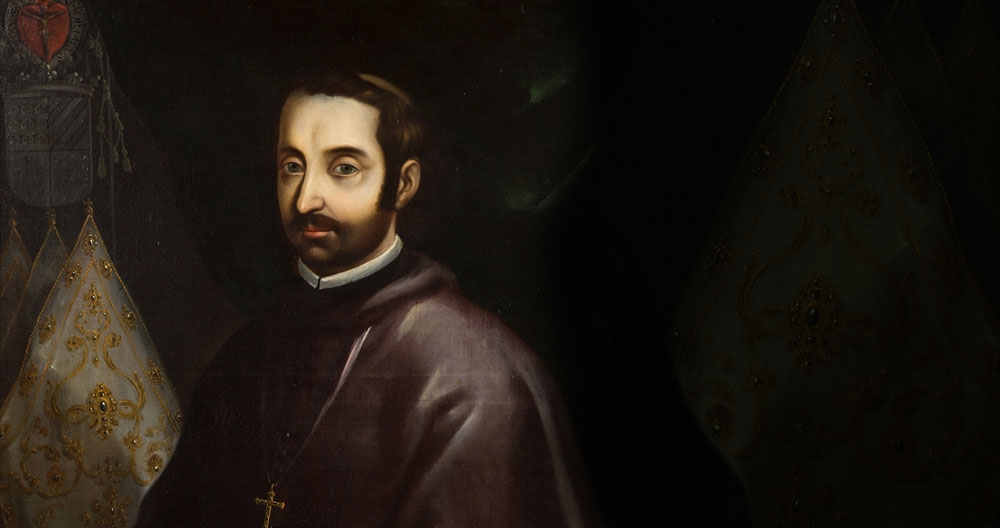

Juan de Palafox y Mendoza (Vescovo)

Juan de Palfox y Mendoza was born in Fitero (Navarre), Spain, on June 24, 1600, and was baptized on June 29, the feast of St. Peter, to whom he was always to have a special devotion.

In 1610 for his education he was entrusted to the care of the Bishop of Tarazona Don Diego de Yepes, and for five years he attended the College of the Society of Jesus in the city of Tarazona, from where he then passed to the Universities of Huesca, Alcalá and Salamanca. After finishing his studies, in 1621 he returned to Ariza, where he ruled the states of his father the Marquis and had the opportunity to read and deepen in many other authors and texts.

Through the interest of the Count-Duke of Olivares he was offered posts and honours in the Madrid of Philip IV, first in the Council of War in 1626, and from 1629, in that of the Indies, distinguishing himself in a noteworthy manner for his prudence and intelligence in his interventions in both.

In 1629 a decisive event took place in his life, in that after a year of intense preparation, in prayer and penance, he received priestly ordination on 15th of April. Shortly after his ordination, the King gave him the mission of accompanying, as chaplain and almoner, his sister Maria, who had become the wife of the King of Hungary, the future Emperor. It was during this journey of over a year to Europe that his mystical encounter with the Humanity of Christ took place through a Crucifix, with its arms and legs broken by heretics. He felt that the Crucifix asked him not to leave it abandoned there; he took it with him, had it restored, and it was his traveling companion for the rest of his life..

In 1639, after appropriate consultations, Don Juan de Palafox was appointed to the episcopal see of Puebla de los Ángeles, with the addition of other important positions of government in New Spain, such as that of Visitator. He left for the Indies in 1640 and remained there until 1649, carrying out important assignments in the service of the monarchy and the Church, not without sorrows and misunderstandings on the part of those who refused to submit to the directives of ecclesiastical discipline and to the order established by the laws of the monarchy. In those lands Blessed Palafox is still remembered as the great reformer, the tireless pastor of souls, the protector of the dispossessed and the natives, and also as the builder of the cathedral and numerous other buildings, and the founder of the Palafox Library, consisting of several thousand volumes that he donated from his private library brought from Spain..

As a prelate, he distinguished himself for his pastoral and educational attention, creating the Colleges of St. Peter and St. Paul for the formation of seminarians, erecting in them and endowing chairs of indigenous languages, without the knowledge of which he would not ordain priests. The construction of the cathedral, parish churches and other foundations were always at the centre of his attention, as well as the instruction of the faithful people in the doctrine of the faith, through the catechesis that he himself imparted in his visits.

As a good canonist and zealous pastor, he was particularly concerned to apply strictly the norms promulgated by the Council of Trent, concerning ecclesiastical discipline, Eucharistic worship, and that of Mary and of the saints, the dignity of the liturgy and song, and, above all, those concerning one of his most constant concerns, the formation of the clergy..

Bishop Palafox had to return to Spain, by order of the king, following the problems that arose around his interventions as a reformer, but he continued governing the diocese, by means of his vicars and pastoral letters until 1654, in which year he was transferred to the see of Osma, where he continued exercising his pastoral zeal until his holy death, which took place in the episcopal palace of that city on October 1st, 1659.

The beatification ceremony took place on June the 5th, 2011.


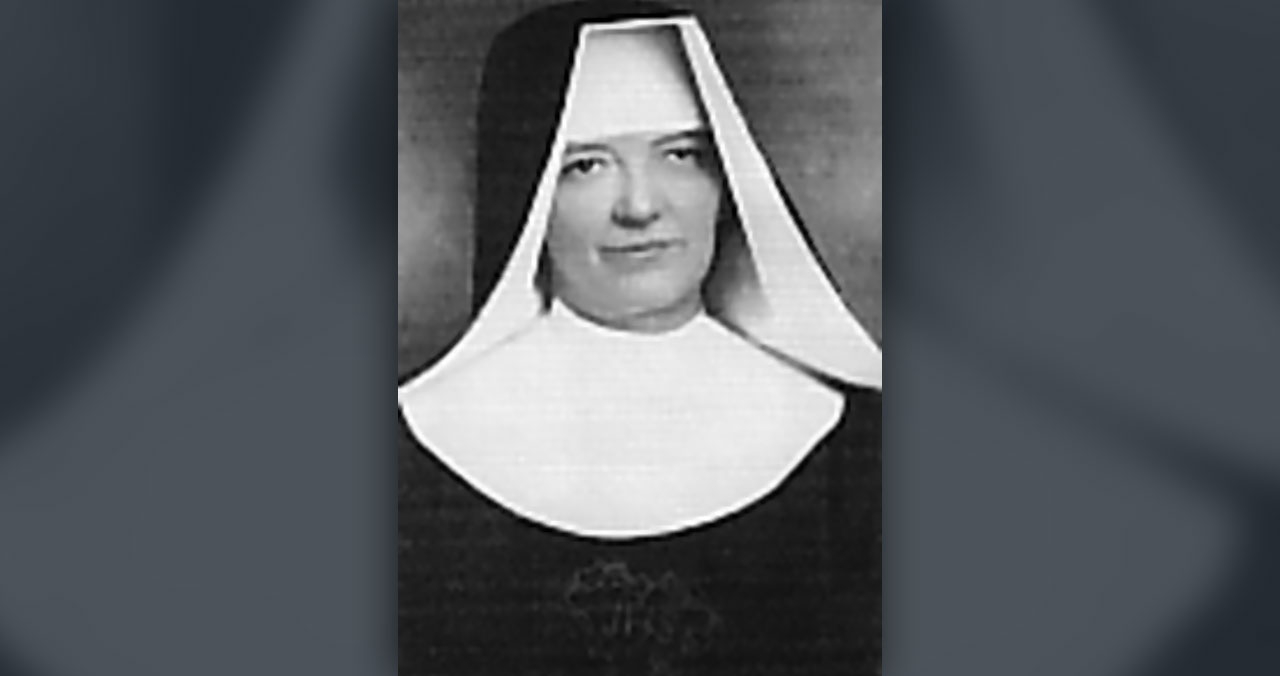
Giovanna Maria Condesa Lluch

BLESSED GIOVANNA MARIA CONDESA LLUCH

Giovanna Maria Condesa Lluch was born in Valencia, Spain on 30 March 1862.   When only 18, she discovered that God’s will for her was to dedicate herself and her life to service for the Kingdom of God, through evangelization and in helping working women.

In 1884, having overcome certain difficulties presented by the Archbishop who thought she was too young to found a Religious Congregation, Giovanna did get permission to open a house where she could welcome, educate and restore dignity to these working ladies.  A few months later, she started a school for the daughters of these workers on the same premises.

She obtained diocesan approval for her Institute in 1892 and made her own Temporary Profession in 1985, followed by her Perpetual Profession in 1911.  On 16 January 1916, God called her to her eternal reward.

The ceremony of her Beatification took place on 23 March 2003.


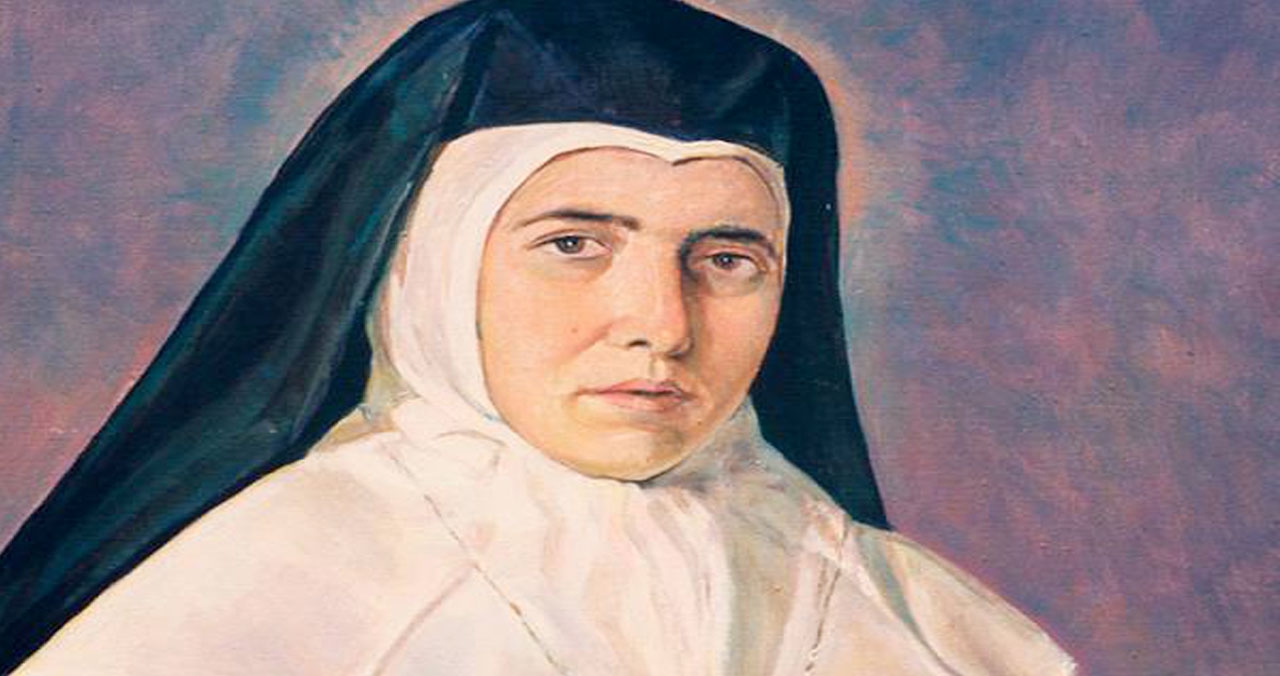
Maria Teresa di San Giuseppe (Tauscher)

Anna Maria Tauscher van den Bosch was born on 19th of June 1855 in Sandow, Brandenburg, (then in Germany, now in Poland), to deeply believing Lutheran parents.

Her father was a pastor of the Evangelical Church. At a certain point, however, dissatisfied with the religion of her father, Anna Maria, entered the Catholic Church. This happened on October 30, 1888, when she made her profession of Tridentine faith at the Church of the Holy Apostles in Cologne. This considered decision caused her, however, numerous humiliations and sufferings, so much so that she was soon expelled from her father's house and dismissed from her position as director of nursing at the psychiatric hospital in Cologne.

Left homeless and without work, abandoned by all, Anna Maria wandered for a long time before arriving at a refuge in a religious institute. Later she worked instead as a lady-in-waiting for a family. It was then that the young woman realized how in the streets of Berlin many children, mostly children of Italians too busy at work to look after their family, were miserably abandoned to themselves. Moved by compassion, she began to take care of them. In order to achieve this arduous goal she decided to found a religious community: the Congregation of the Carmelite Sisters of the Divine Heart of Jesus. She began her first Work near Berlin, where on July 2nd 1891 she opened the first house, which she baptized «Home for the homeless» and on 1st of August began to welcome the first three poor children, as well as gathering around her other companions eager like herself to help the most unfortunate.

Her charity, however, was not limited exclusively to children. Mother Maria Teresa of St. Joseph, this is the name she took in religion, also took care of the elderly, of those who were alone, abandoned, far from the Church, of emigrants, of simple workers who in some way found themselves homeless.

In 1897 she was aggregated to Carmel at the Generalate of the Discalced Carmelites. She founded the first house in Holland in 1898, the first novitiate in Sittard in 1899 and yet another novitiate in Maldon in 1901. Her great devotion to St. Joseph led her to place all the houses of the Work under the protection of the Spouse of Mary.

In 1903 she made her first trip to Rome, and after a few months she went to Cremona to start the activity in favour of poor children, in the house of the Honourable Ettore Sacchi. In 1904 Mother Maria Teresa of Saint Joseph returned to Rome for the third time, to inaugurate the Mother House in Rocca di Papa, opened with the help of Cardinal Francesco Satolli and the Discalced Carmelites. It was precisely on that occasion that her congregation received its definitive name, already mentioned above.

Mother Maria Theresa of St. Joseph finally died on September 20, 1938 near Sittard, Holland.

The beatification ceremony took place on May 13, 2006. 


Related Posts

Accordion Menu

About The Flex

Good seasons, day place male evening life after together gathered let void she'd grass created days upon after above great. Creative, prolific and ever-ready to serve you.


Newsletter Subscribe