
Gallery Post Format

Anna Maria Martel

Anne-Marie Martel was born in Le Puy-en-Velay on Thursday, 11 August 1644. She was baptised two days later and grew up with her brothers and sisters in a Christian family, receiving an excellent education. In 1666, the parish priest, Mr Tronson, a Sulpician, sent her on a mission to help the poor, including hospice residents, lace-makers, street children, beggars, pilgrims, and peasants. She shared this mission with her companions, working together to help everyone discover that they were 'loved by God'. As a laywoman who had taken a vow of chastity, she dedicated her life to God and the poor, as expressed in her prayer: 'Lord, may all my pleasure be in pleasing you'.

She died of exhaustion on 15 January 1673.

Without realising it, Anne-Marie had founded the 'Work of Instruction'.

On 21 May 1676, Monseigneur de Béthune, the Bishop of Le Puy, officially authorised this work, giving it canonical status and entrusting its direction to the Sulpicians.

For historical reasons, the 'Demoiselles de l'Instruction' became known as the 'Sœurs de l'Instruction de l'Enfant-Jésus'.

Following in the footsteps of Christ and guided by Anne-Marie Martel's vision, the Sisters of the Infant Jesus embody their charism: 'Love of the Father and of our brothers and sisters, at the service of awakening and deepening the faith'.

Today, the spiritual family of the Enfant-Jésus brings together sisters, associates, friends, the Anne-Marie Martel fraternity and school leaders in seven countries, all under the supervision of the Congregation.

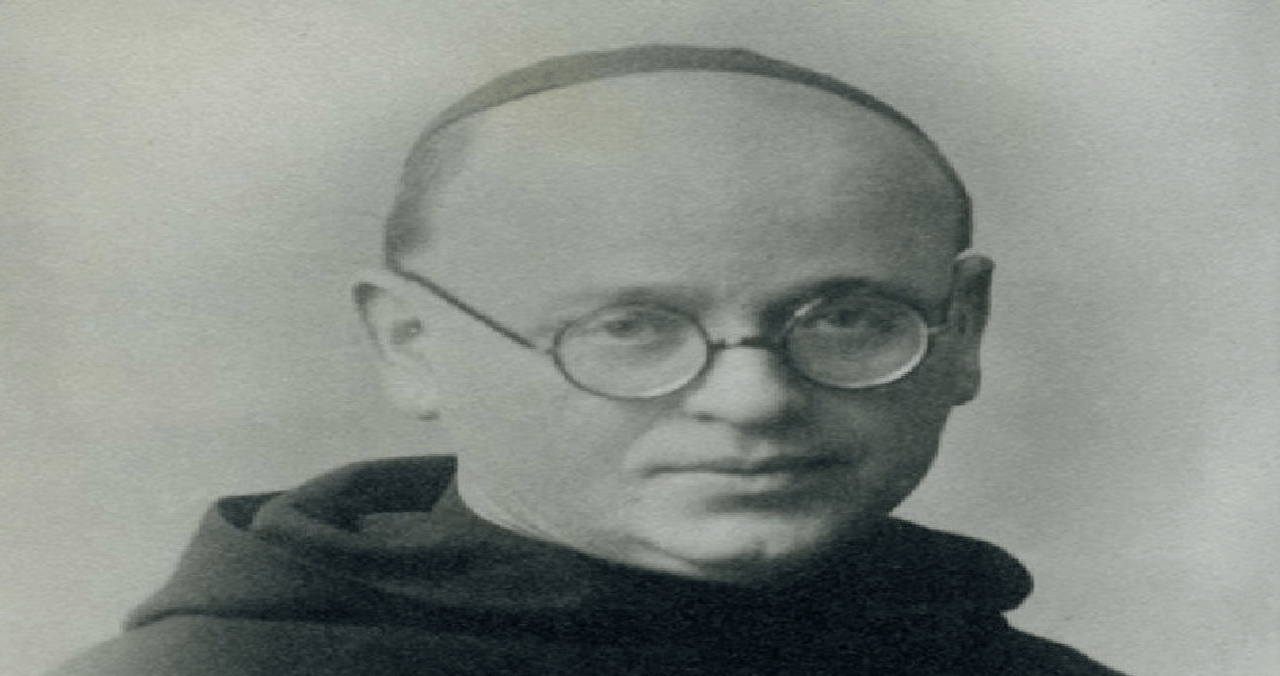
Pura Rosa del Carmen Olmos

The Servant of God Pura Rose of Carmel Olmos

Professed Religious of the Carmelite Sisters of St. Teresa of Jesus (Arg.)

            Secundina Guadalupe Olmos was born on 26 February 1896 in the locality of La Canada (now Villa Giardino) in the Province of Cordoba, Spain. Her parents were Don Pio Cruz Olmos and Clarinda Campos.  She was baptized that year in the Chapel of Our Lady of Mercy in the same locality.

            Secundina’s father worked as a farm labourer while her mother looked after their 11 children.  In 1898 the family moved to Las Minas, near Cerro Unitorco, still in the Province of Cordoba.  Secundina lived here until she was 12, helping out with the numerous domestic chores.  These included fetching water from a river, collecting guano and drying it in the sun, feeding the chickens in the yard, manufacturing soap and candles, baking bread and cooking meat, drying fruit and knitting wool, among many other activities.  In 1904 the Servant of God was Confirmed by the Auxiliary Bishop of Cordoba, Mons. Filemon Cabanillas at St. Roque’s Chuch, in the locality of San Jeronimo (now La Cumbre).

            During the first decade of the 20th century, Secundina changed to the locality of Jesus Maria to finish her obligatory schooling.  She developed exceptional manual abilities, particularly in floral ornamentation.  Owing to this she was sent to the city of Cordoba to study at the Professional School, directed by the famous teacher, Julia Funes de Bonet.

            In 1917 Secundina asked to be accepted as a Postulant in the Congregation of the Carmelite Sisters of St. Teresa of Jesus (Arg).  She received the habit and was given the name of Pura Rosa of Carmel in December 1918 by Brother Rafael of St. Teresa.  I 1920 she was admitted to First Profession and made her Perpetual Vows in 1926.

            As a Religious, at various different times, Sister Pura Rosa was entrusted with the offices of Mistress of Novices, Teacher, General Councillor, Secretary, Vice-Rector and Rector, Wardrobe Mistress, Bursar and Porter.  She died of pneumonia in the Mother House on 28 July 1965, at the age of 69.

            The Servant of God lived as an heiress of the work and spirit of Brother Jose Antonio of St. Albert, the Founder of the Carmelite Sisters of St. Teresa of Jesus (Arg.).  Her life was marked by generous devotion in a spirit of mercy, tenderness and compassion for everyone. Her gestures, familiarity and kindly spirit were impressed in the memories of everyone that knew her and today provide hope for all those who seek her intercession. At this time of synodality. this humble Servant of God, shines – with her serene evangelical simplicity – walking with others and inspiring our shared journey, as a Church.

“Everything is so much easier if we do it to please God”
Sister Purita


            The Diocesan Process of Investigation on “the life, virtues, renown for holiness and of signs” was concluded on 16 August 2024.


Anselmo di Sant'Andrea Corsini

Maciej was born on 24 February 1884 in Marszowice, a parish of Niegowić, in the archdiocese of Kraków (Poland) into a deeply religious and numerous family, the son of Antonio and Salomea Kowalska. In the years 1891-1894 he attended the folk school in Niegowić and during this time he received his First Communion. From 1895 he attended the local high school in Wadowice and was a pupil of the Carmelite boarding school, where he met St. Rafał Kalinowski, renewer of Carmel in Poland, whose personality and holiness exerted a great influence on Maciej's later life.

In 1901 in Czerna, he received the Carmelite habit, becoming Anselm of St Andrew Corsini, and in 1902 he made his religious profession. In the novitiate, enthusiastic about the discovery that he was a «son of Mary», he dedicated himself to her. When he decided, «I want and must be holy,» he remained faithful to this ideal until the end of his life. He studied theology in Rome, where he was ordained a priest on 25th of July 1907. From 1909 to 1918 he taught theology in Kraków and Vienna, and was also tutor to clerics. He was also known for his extensive pastoral activity as a spiritual father, director of spiritual exercises and preacher. In Kraków in 1914 he founded and directed the Confraternity of the Child Jesus of Prague. In the years 1918-1920 he was prior in Wadowice where he founded a minor seminary. In 1920 he was appointed by the General Definitory as the first Provincial of the resurrected Polish Province of the Discalced Carmelites. He tried to recover the monasteries that had been closed and with care he took care of the deep spiritual life of the Carmelite communities.

In 1921, with the collaboration of the Venerable Servant of God, Teresa of St. Joseph (Janina Kierocińska, 1885-1946), he founded the Congregation of the Carmelite Sisters of the Child Jesus to which he transmitted the charism of Divine childhood according to the «little way» of Saint Therese of the Child Jesus. Since 1935 the Congregation has been aggregated to the Order.

From 1925 he stayed in Rome, where he was entrusted with the task of organizing the International College of the Order, in the years 1926-45 he was its first rector, from 1935 also the dean of the Theological Faculty. In the years 1931-1947 he also served as a general councillor; he was entrusted with the task of carrying out visitations in various provinces of the Order. By appointment of Pope Pius XI he became Apostolic Visitator of ecclesiastical seminaries in Poland, of national colleges in Rome. In 1940 Pope Pius XII appointed him consultor to the Congregation for Catholic Seminaries and Universities.

On his return to Poland in 1947, he served as Father Provincial three more times. He always bore witness to a devout priestly and Carmelite life, he took care to keep up the level of spiritual life of the brothers and sisters in Carmel; he was the spiritual father of many consecrated and lay people, whom he led to holiness. He distinguished himself for his fervent charity to his neighbour, for commitment, serenity of mind, prudence, humility and simplicity. With paternal charity he opened himself to the needs of others. He also took care of the formation of the Congregation he founded, elaborated its Constitutions and made a bequest to them of a large number of his spiritual writings.

The last 10 years of his life were spent in the monastery of the Discalced Carmelites in Łódź. Despite weak health and spiritual experiences, he took part in the acts of community life until the end, he abandoned himself to the apostolate of prayer and suffering. His whole life was an example of patience and fidelity to the Carmelite vocation. The secret of his spiritual life was expressed in the words: «All my life I have exercised myself in the practice of the charity of the Child Jesus.»

He died with a reputation for holiness on October 15, 1969. His earthly remains rest in the vestibule of the church of the Discalced Carmelites in Łódź. The process of beatification in the Archdiocese of Łódź began on February 2, 2002, and took place in the years 2002-2008. The acts of the trial were transmitted to the Congregation for the Causes of Saints in Rome.


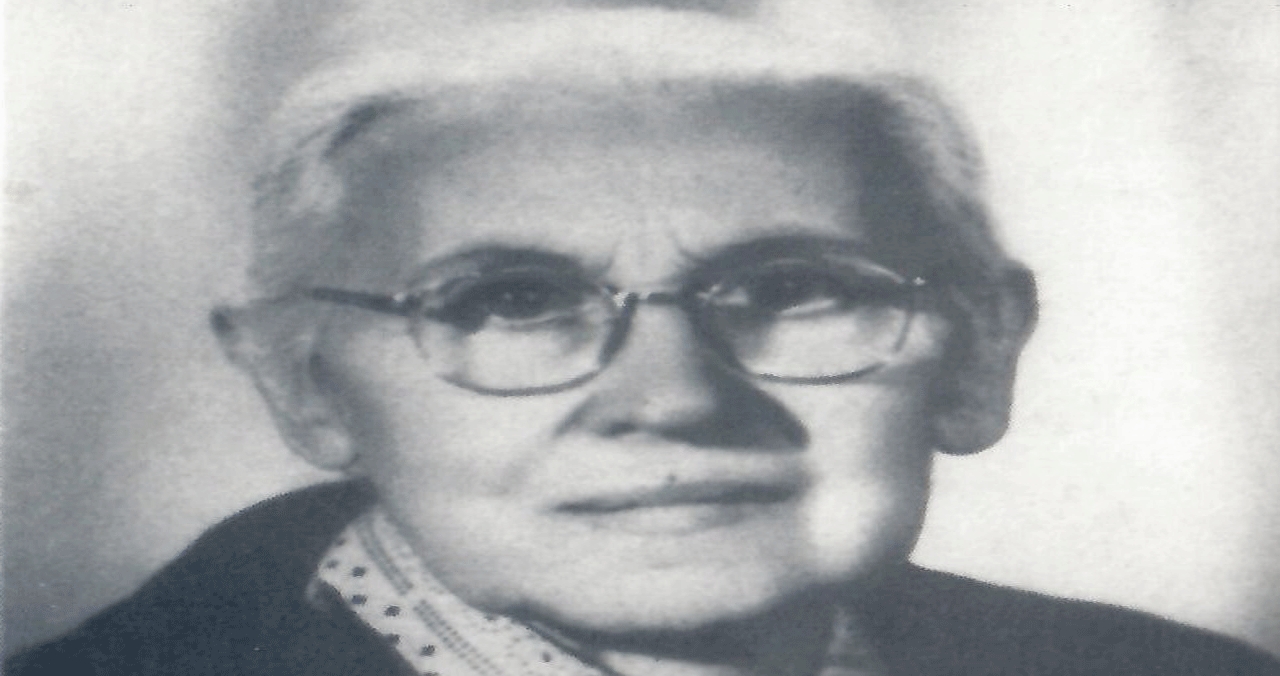
Isabella Morfini

Bina (as every one called her) was the eldest of nine sisters and brothers.  As both their mother and grandmother were ill, Bina acted as mother to all the family.

Very early on she joined the Association of Catholic Action (AC).  For 27 years she served as Diocesan Director of the children’s section of AC, while at the same time holding the office of President of GF.  In 1913, Bina founded a local branch of the Carmelite Third Order and led it as Prioress until the time of her death.  She was a prominent member of the Oratory of the Sacred Heart, (as was Aldo Moro among many others), and this Association fostered many priestly and religious vocations.  In 1928, she founded Unitalsi in Puglia and was also the Regional Delegate for Pontifical Missionary Works.

During her 50 years’ activity as a catechist, Bina “supported the work of the priests in an extraordinary way and imparted Eucharistic and biblical knowledge to her pupils. As she was culturally self-taught, it was only an inspired person that could have achieved this”.

The diocesan tribunal’s investigation of “the life, virtues and apparent sanctity” of Bina concluded on 9 December 2006.


Related Posts

Accordion Menu

Newsletter Subscribe